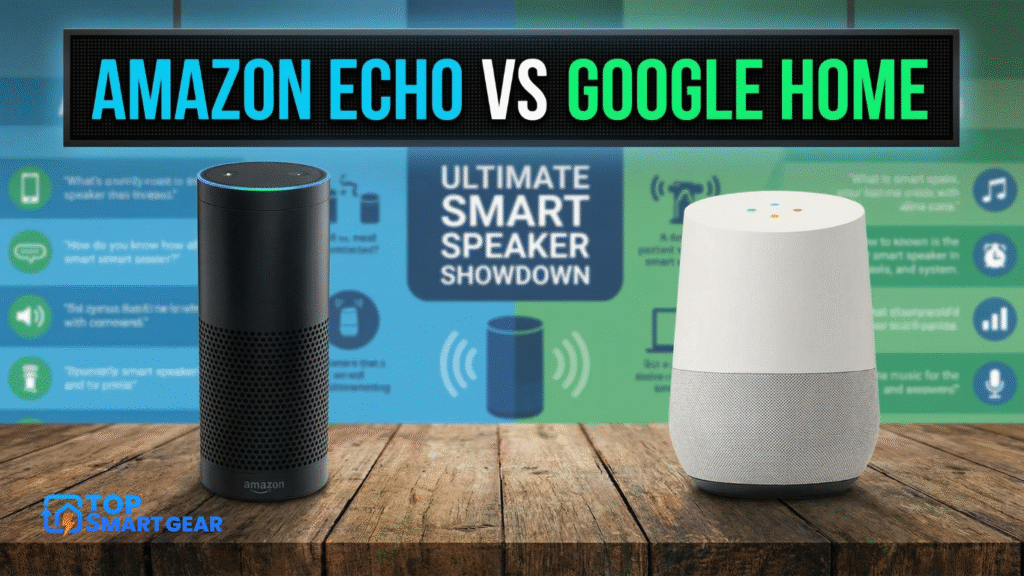
Choosing the right smart speaker can transform your daily routine, improve home control, and change how you access information. When comparing options, Amazon Echo vs Google Home is a common debate. Both offer powerful voice assistants, but they differ in compatibility, features, and user experience. Understanding these differences helps you make the best choice for your smart home setup.
But which one fits your lifestyle better? You’ll discover the key differences that matter most to you—helping you make a choice that feels just right. Ready to find out which device will become your perfect smart companion? Keep reading.
Design And Build
The design and build of smart speakers affect user experience and home style. Both Amazon Echo and Google Home offer unique designs. They blend technology with home decor. This section compares their appearance, size, and color choices.
Appearance And Materials
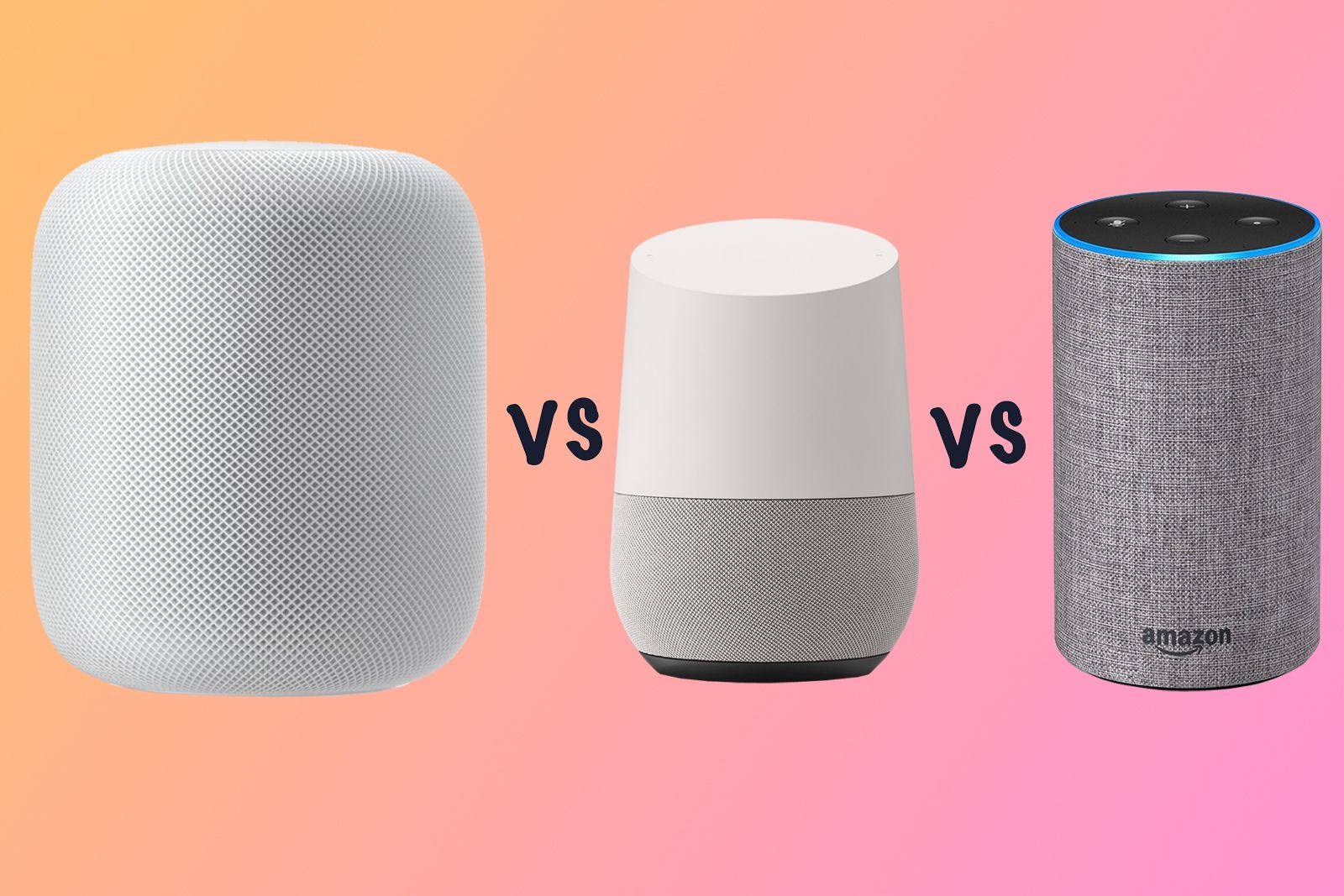
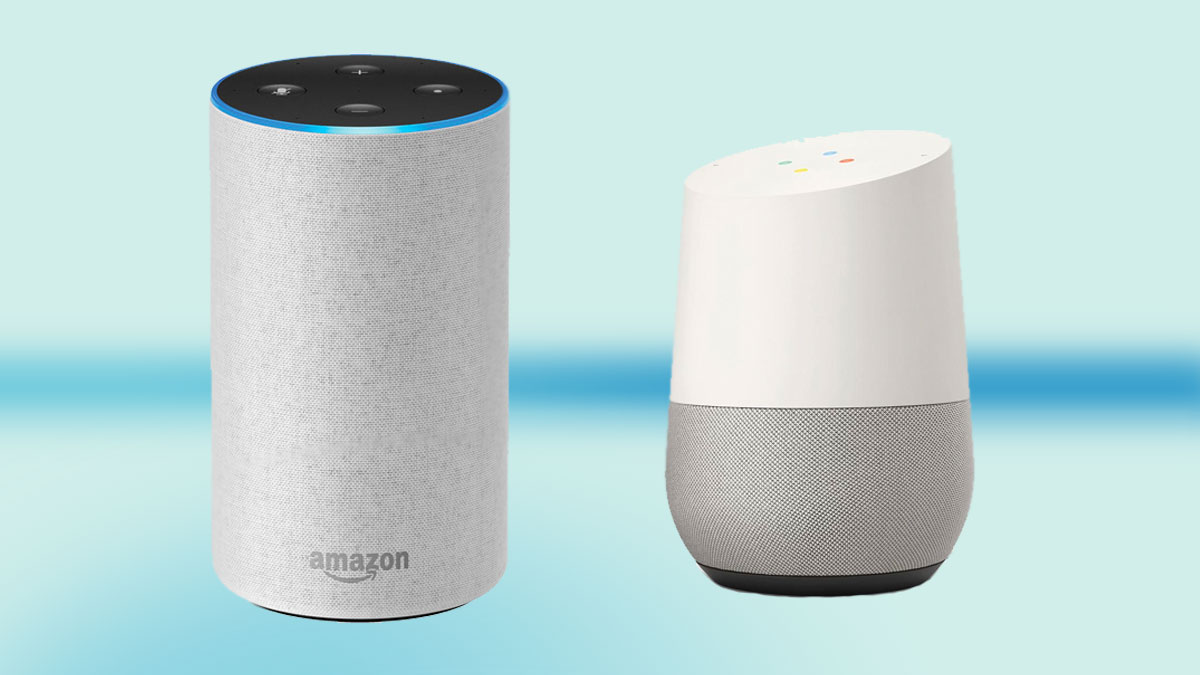
The Amazon Echo has a cylindrical shape with a fabric cover. This fabric gives a soft, modern look. The top has a ring of light that changes colors. It uses plastic and fabric for a sleek finish.
Google Home has a cone shape with a smooth plastic top and a fabric base. The plastic feels smooth and clean. The fabric base adds texture and warmth. Both devices mix hard and soft materials well.
Size And Portability
Amazon Echo is slightly taller and heavier than Google Home. It stays stable on flat surfaces. Google Home is shorter and lighter, making it easier to move. Both fit well on shelves or desks. Portability is good but not meant for travel.
Color Options
Amazon Echo offers several colors like charcoal, heather gray, and sandstone. These neutral tones match most rooms. Google Home provides base covers in multiple colors. Users can swap bases to fit their style. This adds a personal touch to the device.

Credit: www.gearbrain.com
Voice Assistants
Voice assistants have become a key part of smart home devices. They help with daily tasks using voice commands. Amazon Echo and Google Home are two popular choices. Both use intelligent voice assistants to respond and assist users. Understanding their features helps pick the right one.
Alexa Capabilities
Alexa can control smart home devices easily. It plays music, sets timers, and answers questions quickly. It supports thousands of skills, expanding its usefulness. Users can customize Alexa with new features. It also integrates well with Amazon services.
Google Assistant Features
Google Assistant understands natural language very well. It provides detailed answers using Google’s search engine. It can manage schedules, reminders, and smart devices smoothly. It supports many languages and accents. Google Assistant also connects with Google services like Calendar and Maps.
Voice Recognition Accuracy
Both assistants recognize voice commands clearly in quiet rooms. Google Assistant often performs better in noisy environments. Alexa sometimes struggles with complex phrases. Both improve with regular updates. Good microphones help capture commands from a distance.
Sound Quality
Sound quality is key for smart speakers, shaping your music, podcasts, and voice experience. Both devices deliver good audio, but each has unique strengths and slight differences. Comparing Amazon Echo vs Google Home helps understand how they perform in sound quality and which suits your listening preferences best.
Speaker Performance
Amazon Echo uses a powerful speaker. It delivers clear and loud sound for most rooms. Google Home has a balanced speaker setup. It works well for small to medium spaces. Both devices handle voices and music clearly. Echo tends to have a fuller sound. Google Home offers smooth and natural tones.
Bass And Treble Balance
Echo provides strong bass that adds depth to music. Treble sounds bright but not sharp. Google Home keeps bass moderate and treble soft. This balance suits spoken words and soft music. Echo’s bass works well for upbeat songs. Google Home sounds gentle and warm for calm listening.
Multi-room Audio
Amazon Echo supports multi-room audio with easy setup. You can group several Echo devices for whole-home music. Google Home also supports multi-room playback. It lets you play music on multiple Google speakers. Both systems sync sound well across rooms. Echo offers more device choices. Google Home integrates smoothly with Chromecast devices.
Smart Home Integration
Smart home integration is key for modern voice assistants like Amazon Echo and Google Home. These devices help connect your smart gadgets and simplify daily tasks. They bring convenience by controlling lights, thermostats, and more with voice commands.
Choosing between Amazon Echo and Google Home often depends on how well they fit with your existing smart devices. Both offer strong support but differ in compatibility and features.
Compatible Devices
Amazon Echo works with thousands of smart devices from many brands. It supports smart lights, locks, cameras, and thermostats. Popular brands like Philips Hue, Ring, and Nest work well with Echo. Google Home also supports many devices but shines with Google Nest products. It connects easily to smart cameras, lights, and speakers. Both assistants cover most smart home essentials.
Setup And Control
Setting up Amazon Echo is simple through the Alexa app. The app guides you step-by-step to connect devices. Control happens with voice commands or the app itself. Google Home setup uses the Google Home app. It also provides clear instructions and quick device linking. Voice control with Google Assistant is natural and easy. Both apps allow you to manage devices remotely.
Automation Features
Amazon Echo offers routines that trigger multiple actions with one command. For example, saying “Good morning” can turn on the lights and read the news. Google Home uses similar routines called “Routines.” It can adjust lights, play music, or provide weather updates. Both assistants let you schedule tasks and create custom routines. Automation helps save time and makes life easier.
Privacy And Security
Privacy and security are key concerns for smart speaker users. Both Amazon Echo and Google Home collect data to improve services. Understanding how each device handles your information helps you make a safe choice.
Data Handling
Amazon Echo stores voice recordings on Amazon servers. Google Home saves data on Google’s cloud platform. Both companies use this data to improve voice recognition and personalize responses. Users can review and delete their recordings anytime. Transparency about data use varies between the two.
Mute And Privacy Controls
Amazon Echo has a physical mute button that stops the microphone. Google Home also offers a mute switch to disable listening. Both devices show visual indicators when muted. These controls give users quick privacy options. You can also manage settings through their apps.
Security Updates
Amazon and Google regularly release security patches. These updates protect against new threats and bugs. Updates happen automatically in the background. Staying current helps keep your device safe. Both companies focus on improving device security over time.
Credit: www.pocket-lint.com
App Experience
The app experience plays a big role in using smart speakers. It helps control the device and customize settings. Both Amazon Echo and Google Home offer apps that connect to their devices. The quality of these apps affects how easy and fun it is to use the speakers.
User Interface
The Amazon Alexa app has a clean and simple layout. It shows your devices, settings, and skills clearly. Navigation is easy, with icons and menus that are easy to find. The Google Home app also uses a simple design. It focuses on showing devices and rooms quickly. Both apps make it easy to find what you want fast.
Customization Options
Amazon’s app allows many ways to customize. You can set routines, change voice settings, and add skills. It offers detailed control over smart home devices. Google Home’s app offers fewer custom options. It focuses on basic settings and grouping devices. But it still lets you create routines and control multiple devices at once.
Device Management
Managing devices is smooth in both apps. Amazon’s app lists all devices clearly by type and room. You can rename, remove, or update devices easily. Google Home app shows devices organized by room too. It allows quick control and management of connected gadgets. Both apps support voice commands to manage devices without opening the app.
Pricing And Models
Choosing between Amazon Echo vs Google Home involves looking at their pricing and available models. Both brands provide multiple options tailored to different budgets and needs. Understanding the range of versions helps you select the perfect smart speaker that fits your home setup and budget.
Available Versions
Amazon Echo offers multiple models such as Echo Dot, Echo, and Echo Studio. Each model varies in size, sound quality, and features. Google Home provides versions like Google Nest Mini, Nest Audio, and Nest Hub. These versions also differ in size and smart capabilities.
Cost Comparison
The Echo Dot is usually the most affordable Amazon model. It suits small rooms and basic use. Google Nest Mini is priced similarly and serves a comparable purpose. Higher-end Echo and Nest models cost more but offer better sound and features. Prices can change during sales and promotions.
Value For Money
Amazon Echo models deliver solid performance for their price. They include smart home controls and voice assistant features. Google Home devices focus on integration with Google services. Both brands provide good value depending on user needs. Consider your priorities to choose the best option.
Credit: wilsonhand.com
Unique Features
Amazon Echo and Google Home each offer unique features that set them apart. These features help users choose the best smart speaker for their needs. Both devices use voice assistants but differ in how they serve users daily.
Understanding these unique features helps in picking the right device. It also shows how each platform grows with new updates and tools.
Amazon Echo Exclusives
Amazon Echo uses Alexa, which has a wide range of exclusive skills. Alexa can control many smart home devices with ease. Echo offers a feature called Drop In for quick calls between Echo devices. It also supports Amazon shopping by voice. Echo devices include options like Echo Show with a screen. This adds video calling and visual information.
Google Home Highlights
Google Home uses Google Assistant, known for its strong search abilities. It provides detailed answers using Google’s search engine. Google Home supports multiple users with voice recognition. It integrates well with Google services such as Calendar and Maps. The device offers features like Interpreter Mode for live translation. Google Home also integrates with YouTube for voice-controlled media.
Third-party Skills And Actions
Both platforms support third-party apps but in different ways. Alexa uses Skills, which are like apps to add new functions. Google Assistant uses Actions, which integrate apps into conversations. Skills and Actions cover games, fitness, news, and more. This expands what each device can do beyond basic commands. Regular updates bring new features and improvements.
User Experience
User experience plays a big role in choosing a smart speaker. It affects how easily you interact with the device every day. Both Amazon Echo and Google Home offer strong features, but their user experiences differ in key areas. Let’s explore these differences to help you decide.
Ease Of Use
Amazon Echo uses Alexa, which many find simple and straightforward. The voice commands are clear and easy to remember. Google Home uses Google Assistant, known for natural language understanding. It understands longer, more complex questions well. Both devices set up quickly with their apps. Echo’s app is a bit more focused on shopping and smart home control. Google Home’s app feels clean and integrates well with other Google services.
Response Time
Google Home often answers questions faster. It pulls information directly from Google’s search engine. Echo responds quickly too but sometimes takes slightly longer. Alexa handles smart home commands swiftly. Both devices perform well for music playback and timers. The difference in speed is usually small and rarely affects daily use.
Customer Support
Amazon offers 24/7 customer support for Echo users. Their help includes phone, chat, and extensive online guides. Google also provides solid support for Home devices. They offer chat and email assistance with useful troubleshooting articles. Both companies have active user forums. These forums provide tips and solutions from other users.
Frequently Asked Questions
What Are The Main Differences Between Amazon Echo And Google Home?
Amazon Echo uses Alexa, while Google Home uses Google Assistant. Echo integrates well with Amazon services, and Google Home excels in search and smart home control. Both support voice commands but differ in compatible devices and features.
Which Device Has Better Sound Quality, Echo Or Google Home?
Amazon Echo generally offers richer, louder sound with better bass. Google Home provides clear, balanced audio ideal for casual listening. Sound preferences depend on user needs and specific device models.
How Do Amazon Echo And Google Home Handle Smart Home Devices?
Both support numerous smart home products. Echo works best with Amazon-compatible devices. Google Home integrates smoothly with Google Nest and other Google ecosystem gadgets for seamless control.
Which Assistant Understands Voice Commands More Accurately?
Google Assistant in Google Home often provides more natural, accurate responses. Alexa is strong in task execution and third-party skills. Accuracy varies based on accents and question complexity.
Conclusion
Both smart speakers offer features that enhance daily life. Echo integrates smoothly with Amazon services and supports thousands of skills, while Google Home excels in answering questions and syncing with Google apps. When deciding between them, the Amazon Echo vs Google Home comparison comes down to which ecosystem fits best with your existing devices and preferences.
Either can help control your home and answer questions fast. Think about which assistant fits your needs best. Smart speakers make life easier. Simple, helpful, and ready to assist anytime.