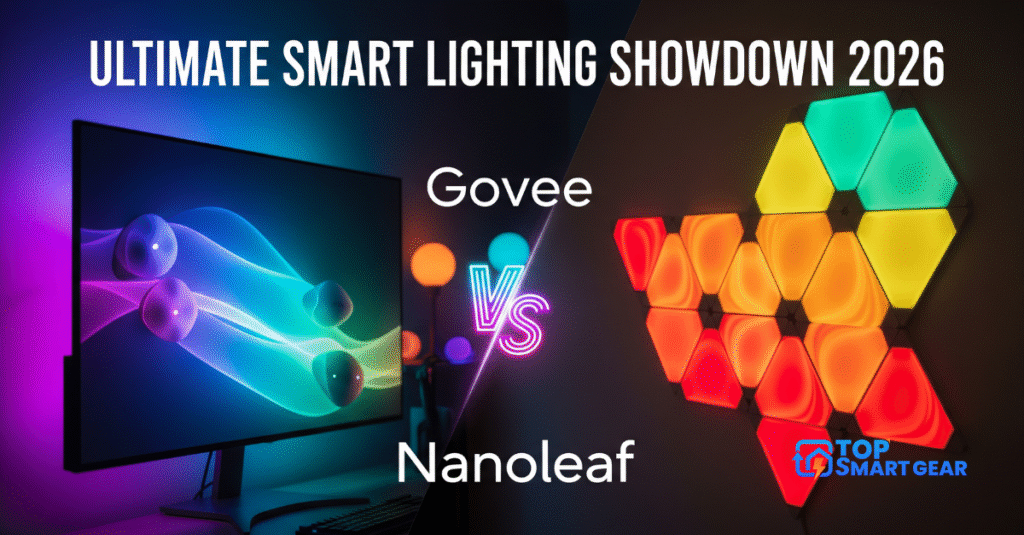
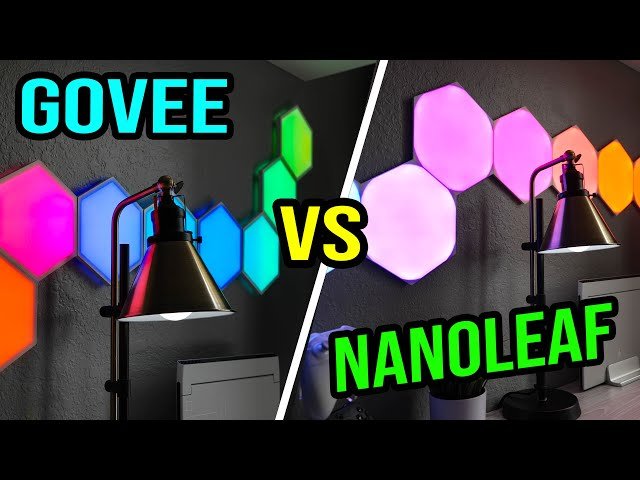
When it comes to smart lighting, choosing between Govee vs Nanoleaf can make all the difference in your home’s atmosphere. You want lights that are easy to use, look stunning, and match your personal style.
That’s why you’re here—trying to decide between Govee and Nanoleaf. Both offer unique features, but which one truly matches your needs? Keep reading to find out which smart lighting solution will transform your space just the way you want.
Brand Backgrounds
Understanding the background of each brand helps us see their strengths. Both Govee and Nanoleaf are leaders in smart lighting. Their history shows their focus and goals. This can guide your choice between them.
Govee History And Mission
Govee started in 2017. They focus on smart home products. Their main goal is to bring affordable, quality lighting to everyone. Govee wants easy-to-use technology. They aim to improve daily life with smart solutions. Their products often feature app control and voice commands.
Nanoleaf Origins And Vision
Nanoleaf began in 2012 in Canada. The company focuses on creative and eco-friendly lighting. They design unique light panels and shapes. Their vision is to change how people see light. Nanoleaf works to combine art and technology. Energy-saving and sustainability are key parts of their mission.
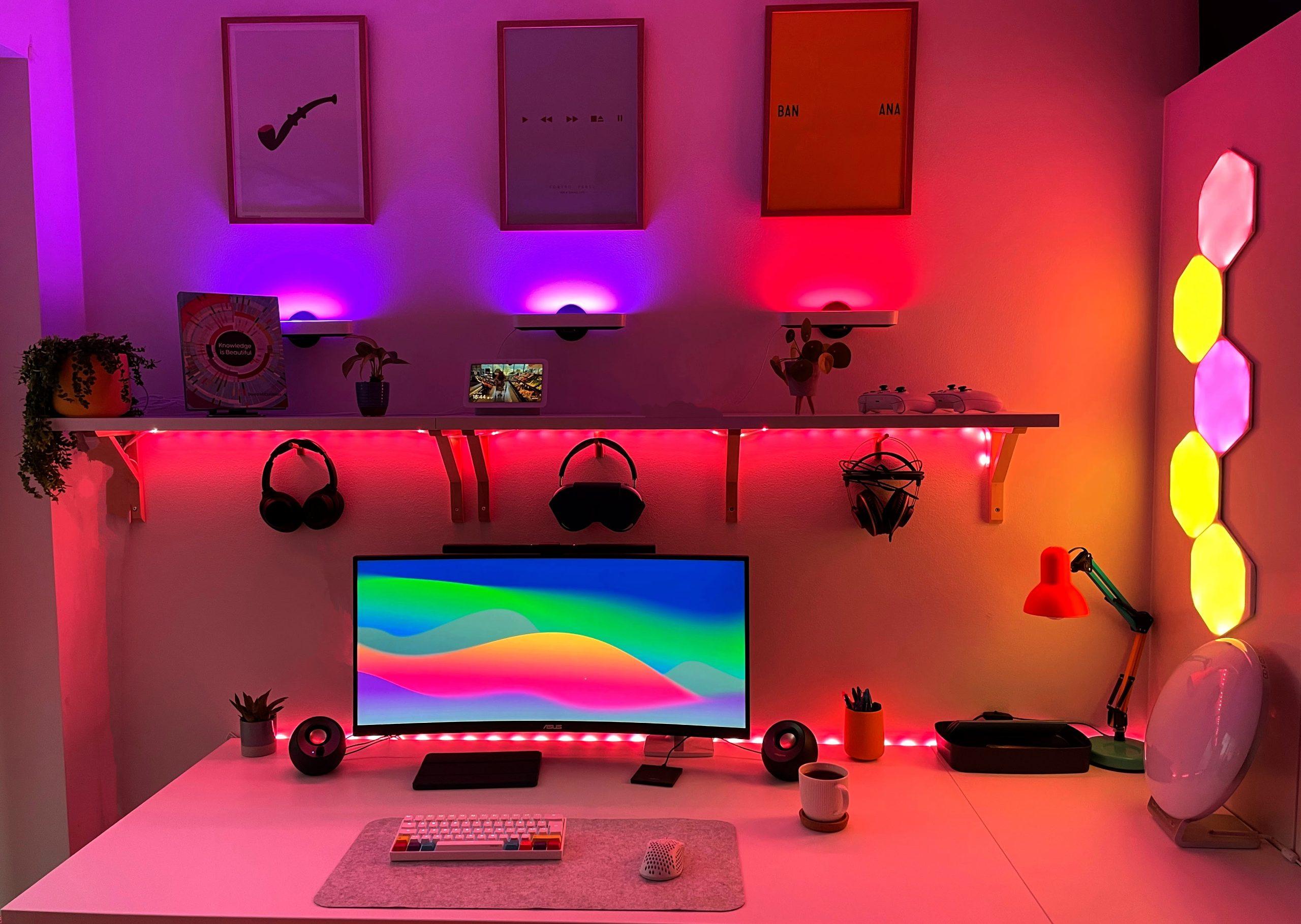
Credit: geekyminded.com
Design And Build Quality
Design and build quality are key when choosing smart lighting. These factors affect how long the product lasts and how it fits in your space. Govee and Nanoleaf both offer strong options. They differ in materials, durability, and style. Understanding these differences helps you pick the right one.
Materials And Durability
Govee lights use sturdy plastic that feels solid. The materials resist scratches and minor drops. This makes Govee good for active spaces like living rooms or kids’ rooms. Nanoleaf panels are made from a lightweight, smooth plastic. They have a sleek, modern look but need careful handling. Nanoleaf’s build is less rugged but still strong enough for walls. Both brands provide easy installation with secure mounts. Govee’s plastic is slightly thicker, enhancing durability in high-traffic areas.
Aesthetic Appeal
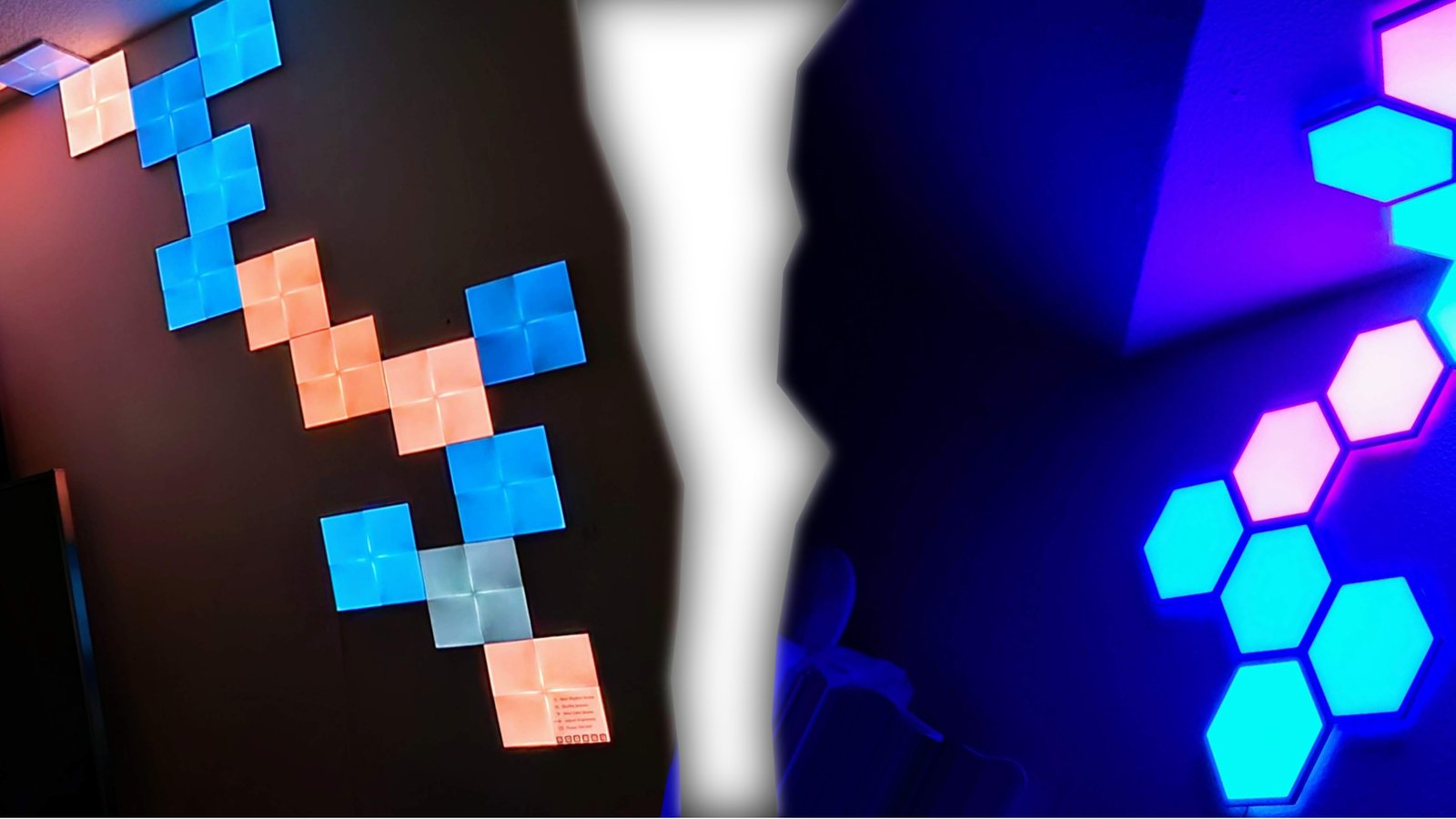
Nanoleaf designs stand out for their unique geometric shapes. Triangles, hexagons, and squares create artistic wall patterns. This style suits modern and minimalist rooms well. Govee focuses on simpler shapes like rectangles and strips. They blend seamlessly with various decor styles without drawing undue attention. Nanoleaf lights often act as wall art and a light source. Govee options work better for subtle mood lighting. Color blending and brightness levels are strong in both brands. Each offers a clean, polished finish that looks professional.
Lighting Features
Lighting features play a key role when comparing Govee vs Nanoleaf smart lighting panels. These features determine how well the lights match your space and mood. Both Govee and Nanoleaf offer unique options designed to create the perfect atmosphere in any room. Understanding their differences can help you choose the right smart lighting solution for your home.
Color Range And Brightness
Govee lights offer millions of colors. They provide bright, vivid light. This helps fill large rooms with color. Nanoleaf also offers a wide color palette. Their brightness is adjustable but often softer than Govee’s. Nanoleaf focuses on smooth color transitions. Govee aims for sharper, more intense lighting effects.
Customization Options
Nanoleaf panels allow users to arrange shapes freely. This creates unique wall designs. The app supports a range of preset scenes and effects. Govee also offers many color patterns. It features music sync and voice control options. Both brands let you customize lighting speed and brightness. Nanoleaf’s modular design gives more creative freedom. Govee excels in easy-to-use controls and fast setup.
Smart Controls
Smart controls define how easily you can operate your lighting system. Both Govee and Nanoleaf offer innovative control options. These controls enhance user experience and add convenience.
Simple and intuitive controls make daily use enjoyable. Let’s explore their app functionality and voice assistant compatibility.
App Functionality
Govee’s app is user-friendly and quick to navigate. It allows you to change colors, set schedules, and create scenes. The app supports custom effects and music sync.
Nanoleaf’s app also provides smooth control with a clean design. It offers advanced features like rhythm visualizer and dynamic scene creation. The app updates often to improve user experience.
Both apps support multiple devices in one account. This makes managing several lights easy and efficient.
Voice Assistant Compatibility
Govee supports major voice assistants such as Alexa and Google Assistant. You can turn lights on or off and change colors by voice. Voice commands work well and respond quickly.
Nanoleaf also integrates with Alexa, Google Assistant, and Apple HomeKit. This offers more flexibility for smart home users. Voice control includes brightness and scene adjustments.
Both brands provide a hands-free way to manage your lights. This adds comfort and fits modern smart home setups.
Installation And Setup
Setting up smart lighting can feel tricky at first, but Govee vs Nanoleaf both make the installation process simple. Each brand focuses on a user-friendly setup that doesn’t require technical skills. Let’s explore how easy it is to install and place each option in your space for the best lighting effect.
Ease Of Installation
Govee lights come with clear instructions and simple controls. Most users can start using them in minutes. The app guides you through each step. Nanoleaf panels also offer a quick setup process. Their app is intuitive and easy to navigate. Both products connect easily to Wi-Fi. No special tools are needed for setup. Govee may suit beginners better due to its straightforward steps.
Mounting And Placement Flexibility
Nanoleaf panels use strong adhesive strips. They stick well to walls and are easy to reposition. Their modular design lets you create custom shapes. This adds creative freedom to your room design. Govee lights offer different mounting options. Some models come with clips, others with adhesives. Placement depends on your light type and room size. Govee’s flexibility supports both flat and curved surfaces. Nanoleaf excels in artistic wall displays. Both brands give good options for unique lighting setups.
Performance And Responsiveness
Performance and responsiveness are key factors in choosing smart lighting panels. These qualities affect how smoothly the lights react to commands and how well they sync with music or apps. Both Govee and Nanoleaf offer good options, but they differ in some ways. Understanding these differences helps you pick the right product for your needs.
Latency And Syncing
Latency means the delay between a command and the light’s response. Nanoleaf panels respond almost instantly, with very low delay. Govee lights have a slight delay, but it is usually not noticeable. Both brands sync well with music, but Nanoleaf’s syncing feels smoother and more precise. Govee uses sound sensors, while Nanoleaf relies on app data for syncing.
Reliability
Reliability means how often the lights work without issues. Nanoleaf has a strong reputation for stable performance and fewer connection drops. Govee can have occasional connectivity problems, especially over Wi-Fi. Both brands update their apps regularly to fix bugs and improve stability. Overall, Nanoleaf tends to be more reliable in daily use.
Energy Efficiency
Energy efficiency is a key factor in choosing smart lighting. It affects your electricity bills and the environment. Both Govee and Nanoleaf offer unique features that impact their energy use. Understanding their power consumption and sustainability helps make a better choice.
Power Consumption
Govee lights generally use less power. Their LED panels are designed to be bright yet efficient. Most models consume about 12 to 15 watts. Nanoleaf panels often use more power, around 20 to 25 watts. The higher wattage supports more complex light effects and larger panels. Still, both brands provide energy-saving modes to reduce use.
Sustainability Aspects
Nanoleaf focuses on eco-friendly materials in their products. They use recyclable components and reduce waste in packaging. Govee also works to minimize environmental impact but with less emphasis on materials. Both brands aim to create durable products that last long. This reduces the need for frequent replacements and lowers waste.
Credit: www.androidcentral.com
Pricing And Value
When comparing Govee vs Nanoleaf, pricing and overall value play a major role in choosing the right smart lighting. Both brands offer unique products at different price points. Understanding their costs, features, and long-term value helps you make a smarter buying decision. This section breaks down what you get for your money with each option.
Cost Comparison
Govee products are usually less expensive than Nanoleaf products. Basic Govee light panels start at a lower price point. Nanoleaf sets often come with a higher price tag. This reflects their design and technology. Govee kits are budget-friendly for most buyers. Nanoleaf appeals to those who want premium style and features.
Govee offers smaller starter kits. Nanoleaf kits tend to be bigger and more complex. The cost can increase with added panels or accessories. Both brands sometimes offer sales and discounts. Watch for deals to save money.
Features Vs Price
Govee lights include good color options and app control. They provide solid features for the price. Some models have music sync and voice control. Nanoleaf products offer advanced customization and touch controls. Their panels can create intricate light shows.
Nanoleaf’s premium features justify the higher price for many users. Govee balances cost and basic smart lighting well. Consider what features matter most before deciding. Both brands deliver value but target different needs and budgets.
Customer Support
Customer support plays a big role in choosing smart lighting brands like Govee and Nanoleaf. Good support helps solve problems fast and keeps users happy. Both brands offer ways to help customers with their products.
Warranty And Service
Govee provides a standard one-year warranty on most products. This covers defects and malfunctions. Customers can contact support via email or live chat. Response times are usually quick.
Nanoleaf offers a similar one-year warranty. They also provide extended warranty options on some items. Nanoleaf’s customer service is reachable through email and phone. Many users report helpful and friendly service.
User Community And Resources
Govee has an active online user community. Forums and social media groups help users share tips and fixes. The official website includes guides and FAQs for easy troubleshooting.
Nanoleaf also supports a strong user base. Their community forum allows users to discuss ideas and issues. Nanoleaf’s website has detailed manuals and video tutorials for beginners and experts alike.
Credit: www.youtube.com
Best Use Cases
Choosing the right smart lighting depends on the space and mood you want. Both Govee and Nanoleaf offer unique features that suit different environments. Understanding their best use cases helps pick the perfect fit for your needs.
Ideal Settings For Govee
Govee lights work well in casual and everyday spaces. Bedrooms, living rooms, and home offices benefit from their flexible strip lights. They provide soft, colorful glows that create a cozy vibe.
Govee’s easy setup fits well in rental homes or dorm rooms. The lights can stick to walls or furniture without damage. They also sync with music, making them great for parties or gaming sessions.
These lights suit smaller rooms where subtle lighting is best. Their app controls allow quick changes from warm to cool tones. Perfect for reading, relaxing, or working.
Ideal Settings For Nanoleaf
Nanoleaf panels shine in modern and creative spaces. Offices, studios, and high-tech rooms gain from their geometric designs. They act as both light and art on walls.
Nanoleaf suits large walls where you want a bold statement. The sharp shapes and bright colors catch attention instantly. They also respond to touch and sound, adding interactivity.
These panels work well in spaces needing strong, adjustable light. Perfect for brainstorming, streaming, or showcasing a unique style. Nanoleaf fits users who enjoy tech and design.
Frequently Asked Questions
What Are The Main Differences Between Govee Vs Nanoleaf?
Govee offers affordable, versatile lighting with strong app control. Nanoleaf focuses on premium, customizable panels and smart home integration. Govee suits budget buyers; Nanoleaf appeals to design enthusiasts seeking advanced features and aesthetics.
Which Brand Provides Better Smart Home Compatibility?
Nanoleaf supports major platforms like Apple HomeKit, Google Assistant, and Alexa seamlessly. Govee also offers compatibility but with slightly fewer integrations. For full smart home ecosystem integration, Nanoleaf generally leads.
How Does The Price Of Govee Compare To Nanoleaf?
Govee products are more budget-friendly and ideal for cost-conscious users. Nanoleaf’s premium panels cost more, reflecting the design and technical quality. Choosing depends on your budget and desired features.
Are Govee Lights Easy To Install And Set Up?
Yes, Govee lights are user-friendly with simple installation and app setup. They typically come with clear instructions and flexible mounting options. This makes them accessible for beginners.
Conclusion
When comparing Govee vs Nanoleaf, both brands offer unique smart lighting options. Govee is ideal for users who want budget-friendly lighting with an easy setup, while Nanoleaf appeals to those who prioritize premium design and deep customization. Consider your room size, décor style, and budget before making a choice. Ultimately, think about which features matter most to you.
Brightness, shape, and app control vary by brand. Either choice can brighten your space nicely. Take time to pick what fits your needs best. Your perfect light awaits.