Are you curious if your smart lights are secretly driving up your electricity bill? Many people wonder, “Do smart lights use more electricity?” You might think that because they’re high-tech, they consume more power than regular bulbs.
But is that really true? Understanding how smart lights work and how much energy they consume can help you make smarter choices for your home and your wallet. Keep reading to discover the surprising facts about smart lights and electricity—so you can decide if they’re worth the switch.
Smart Lights And Energy Use
Smart lights have become popular for their convenience and modern features. Many wonder, Do Smart Bulbs Use More Power than traditional bulbs? Understanding Smart Lights and Energy Use helps answer this question clearly. Smart lights can offer better control over lighting, which may lead to Electricity Savings Smart Lighting. Yet, some worry about the extra energy these devices use due to their smart functions.
How Energy Efficiency Smart Lights Work
Smart lights often use LED technology, known for being energy efficient. These bulbs use less electricity than old incandescent bulbs. The smart features, like dimming and scheduling, help save energy. For example, you can set lights to turn off automatically when not needed.
- LED bulbs use about 75% less energy than incandescent bulbs.
- Smart controls reduce wasted electricity by turning lights off on time.
- Adjusting brightness lowers power use further.
Do Smart Lights Increase Electricity Cost?
Smart lights have small electronics inside that use a bit of power even when off. This standby power is very low. In most homes, the extra electricity cost is minimal. The savings from better control usually outweigh this small use.
| Item | Power Use (Watts) |
|---|---|
| Traditional Incandescent Bulb | 60 |
| Smart LED Bulb (active) | 9 |
| Smart LED Bulb (standby) | 0.5 |
Ways Smart Lights Help Cut Electricity Use
Smart lighting offers options that reduce power use without effort.
- Scheduling: Set lights to turn off when not needed.
- Remote control: Turn off lights forgotten at home.
- Dimming: Use only the light needed for the moment.
- Motion sensors: Lights turn on only when someone is present.
Understanding Smart Lights Electricity Cost
Comparing costs helps see true energy use. Smart bulbs cost more upfront but save money over time. The small increase in standby power does not raise electricity bills significantly. Savings come from lower energy use and long bulb life.
Comparing Smart Lights To Traditional Bulbs
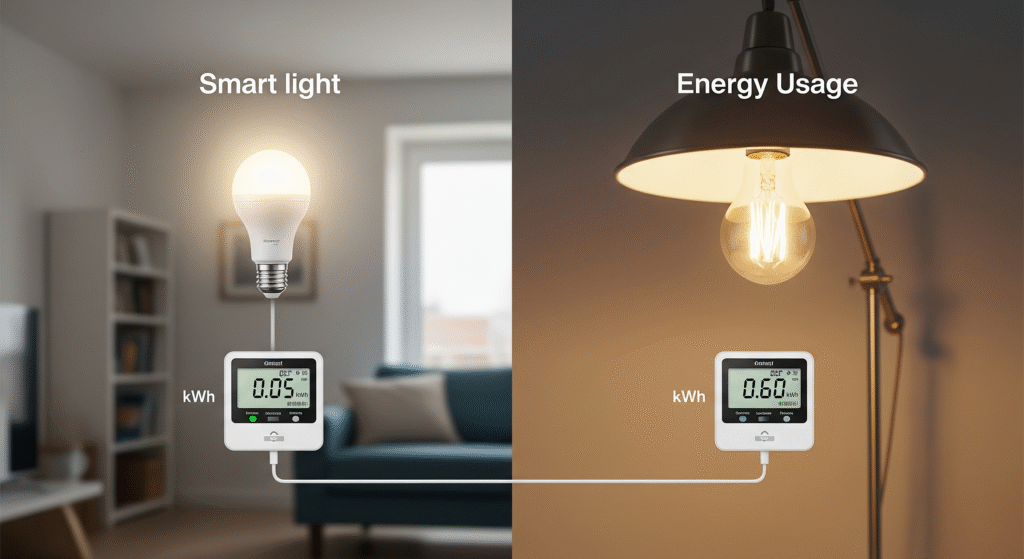
Smart lights have become popular for their convenience and modern features. Comparing smart lights to traditional bulbs helps us understand their energy use. Traditional bulbs, such as incandescent ones, consume a lot of power, while smart lights mostly use energy-efficient LED technology. Many people also ask, “Do smart lights use more electricity?” and “Do smart bulbs use electricity when off?” These questions are important for understanding energy savings and reducing your monthly electricity bill.
Energy Consumption Of LED Vs Incandescent
Smart lights usually use LED bulbs, which consume much less energy than incandescent bulbs. Incandescent bulbs create light by heating a metal filament, which wastes a lot of energy as heat. LEDs work differently by using semiconductors to emit light, which is far more efficient.
Here is a comparison of typical energy use:
| Bulb Type | Wattage | Lumens (Brightness) | Energy Cost per 1000 Hours |
|---|---|---|---|
| Incandescent | 60 W | 800 lm | $0.72 |
| LED (Smart Light) | 10 W | 800 lm | $0.12 |
The LED bulb uses about 85% less electricity than incandescent bulbs for the same brightness. This makes smart lights highly energy-efficient. Besides, smart lights offer features like dimming and scheduling, which further reduce energy use.
- LED smart bulbs last longer than incandescent bulbs.
- Smart controls allow turning off lights remotely.
- Energy savings increase with the proper use of smart features.
Standby Power Usage In Smart Lights
Smart lights have electronics that stay active even when the light is off. This leads to standby power use. Some ask, do smart bulbs use electricity when off? The answer is yes, but the amount is very small.
Standby power keeps the bulb ready to respond to commands from your phone or voice assistant. Most smart bulbs use less than 1 watt in standby mode. This is a tiny fraction of their total active power use.
Typical standby power details:
- Standby power: 0.5 to 1 watt
- Active power: 8 to 12 watts (LED smart bulbs)
- Traditional bulbs: 0 watts when off (no electronics)
For example, if a smart bulb uses 1 watt of standby power, it consumes about 24 watt-hours a day when off. This equals roughly 8.8 kWh per year, costing less than $1 annually. This is low compared to the energy savings from LED technology.
Turning smart bulbs off at the switch stops all power use but disables smart features. Using scheduling or voice commands can reduce energy use without losing convenience.
Factors Influencing Electricity Usage
Smart lights bring convenience and style to homes but raise questions about electricity use. Understanding the factors influencing electricity usage helps to see if smart lights consume more power. Several elements affect energy consumption, such as brightness, color settings, usage habits, and network connections. These factors can change how much electricity smart lights use compared to traditional bulbs.
Brightness And Color Settings
The brightness level of smart lights directly affects electricity use. Higher brightness means more power consumption, while dimmer settings save energy. Smart lights often allow users to adjust brightness easily, helping reduce waste.
- High brightness: Uses maximum power, similar to traditional bulbs.
- Low brightness: Uses less electricity, sometimes 10-20% of full power.
Color settings also impact energy use. White light at full brightness uses more energy than colored lights or lower brightness whites. Some colors, like blue or green, may use less power than warm yellow or white tones.
| Setting | Power Use | Notes |
|---|---|---|
| Bright White (100%) | High | Maximum electricity consumption |
| Dimmed White (50%) | Medium | Uses less power, saves energy |
| Colored Light (varies) | Low to Medium | Depends on color and brightness |
Adjusting brightness and color allows control over electricity use. Smart lights can be set to use less power while maintaining comfort.
Usage Patterns And Automation
How often and how long smart lights are used affects electricity consumption. Lights left on all day use more power than those switched off when not needed. Smart lights support automation to reduce waste.
- Timers: Turn lights off after a set time.
- Motion sensors: Activate lights only when someone is in the room.
- Schedules: Lights switch on or off based on daily routines.
Automation helps avoid accidental energy waste. Usage patterns like frequent on/off switching or long operation times impact total electricity use. Smart lights may consume slightly more power in standby mode for connectivity, but automation often reduces overall consumption.
Example usage pattern:
- Lights turn on at 7 PM.
- Motion sensor turns off lights after 10 minutes of no activity.
- Lights turn off completely at midnight.
This pattern saves electricity compared to manual use where lights stay on longer.
Connectivity And Network Impact
Smart lights connect to Wi-Fi or other networks to allow remote control. This connectivity uses a small amount of electricity. The energy used by networking components is usually low but adds to total consumption.
- Wi-Fi modules: Consume power even when the light is off.
- Hub devices: Some systems use extra hubs that consume power constantly.
- Bluetooth: Uses less power than Wi-Fi but has shorter range.
The network impact depends on the smart lighting system design. Lights with built-in Wi-Fi may use more standby power than those using simpler connections.
| Connection Type | Standby Power Use | Notes |
|---|---|---|
| Wi-Fi | Higher | Always connected to internet |
| Bluetooth | Lower | Shorter range, less standby power |
| Zigbee/Z-Wave (via hub) | Hub uses power | Hub may increase total system consumption |
Choosing a smart light system with efficient connectivity helps reduce electricity use. Balancing network needs with power consumption is key for energy savings.
Energy Saving Features In Smart Lighting
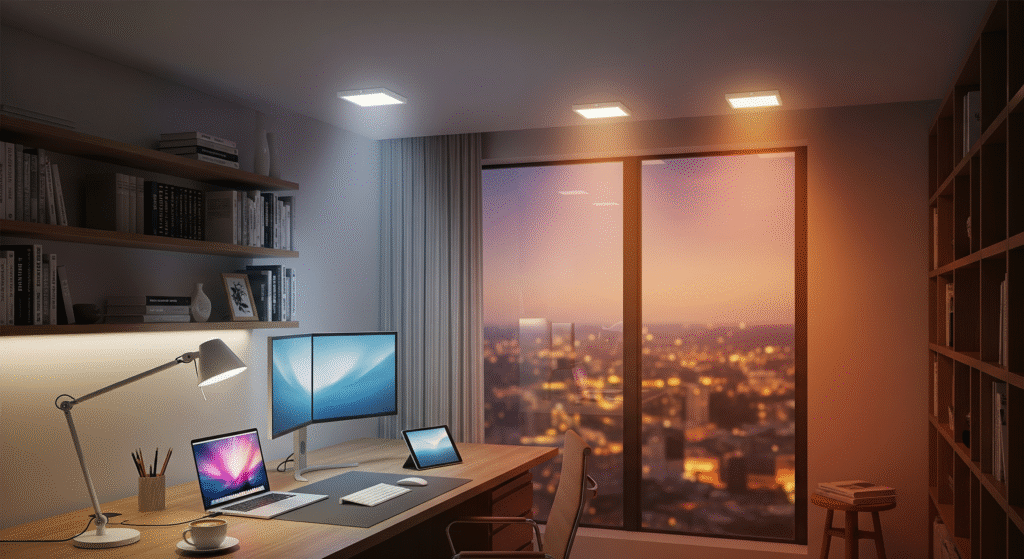
Smart lighting offers more than just convenience and style. It includes energy saving features designed to reduce electricity use. These features help answer the common question, “do smart lights use more electricity?” By using smart bulbs, you can control when and how lights operate, which often leads to lower energy bills. Smart bulbs are energy efficient because they work with technology that manages power use effectively. This section explains key features that help smart lights save energy and cut costs.
Scheduling And Timers
Scheduling and timers let you set your smart lights to turn on or off at specific times. This feature helps avoid wasting energy by keeping lights off when not needed. You can create daily or weekly schedules that fit your routine.
- Set lights to turn on only when you need them.
- Automatically turn off lights at bedtime or when leaving home.
- Save energy by avoiding lights staying on all day or night.
For example, you can program a smart bulb to switch on 30 minutes before you arrive home. Then, it turns off automatically after you go to bed. This avoids leaving lights on for hours without purpose.
| Schedule Option | Energy Saving Benefit |
|---|---|
| Morning On, Night Off | Lights only use power during active hours |
| Vacation Mode | Simulate presence without wasting energy |
| Custom Daily Timers | Match lighting to daily habits, reduce waste |
Scheduling is a simple way to keep lights from running unnecessarily. It helps ensure smart bulbs use electricity only when needed.
Motion Sensors And Presence Detection
Motion sensors and presence detection add another layer of energy efficiency to smart lighting. These features turn lights on when they detect movement and off after no activity is sensed.
- Automatically light rooms only when occupied.
- Prevent lights from staying on in empty spaces.
- Ideal for hallways, bathrooms, and closets where usage is brief.
Smart bulbs with motion sensors are perfect for saving energy in areas where lights are often forgotten on. For example, a sensor can switch off the light in a garage after 5 minutes of no movement.
Presence detection works by sensing if anyone is in the room. It can keep lights on while people are present and turn them off when the room is empty. This reduces electricity use significantly, especially in large homes or offices.
| Feature | Energy Saving Role |
|---|---|
| Motion Sensor | Activates lights only during movement |
| Presence Detection | Maintains lighting while room is occupied |
| Auto-Off Timer | Turns off lights after inactivity |
These smart lighting options ensure lights are not wasting energy in empty rooms. This is a key reason why smart bulbs are energy efficient.
Dimming Capabilities
Dimming lets you reduce light brightness and save energy at the same time. Smart bulbs often support dimming, allowing users to adjust light levels to match their needs.
- Lower brightness uses less electricity.
- Create comfortable lighting without full power.
- Extend bulb lifespan by running at lower intensity.
Using dimmers is especially useful in living rooms and bedrooms where bright light is not always necessary. Dimming also helps reduce eye strain and improve ambiance.
Here’s how dimming affects energy use:
| Brightness Level | Approximate Energy Use |
|---|---|
| 100% (Full Brightness) | 100% of rated power |
| 50% Brightness | About 40-60% of power |
| 25% Brightness | About 20-30% of power |
Dimming reduces energy use significantly, especially when lights do not need to be very bright. This feature adds flexibility and savings, supporting the idea that smart bulbs are energy efficient.
Cost Implications Of Smart Lighting
Smart lighting offers modern convenience and energy efficiency, but many people still wonder about the cost implications. Understanding the answer to the question, “Do smart lights use more electricity?” is essential for evaluating their true value. The cost of smart lighting includes both the initial investment and the long-term savings it provides. This section explores these factors to help you decide whether smart lighting is a worthwhile choice for your home or office.
Initial Investment Vs Long-term Savings
The initial investment in smart lighting is higher than that of traditional bulbs. Smart lights often cost more due to built-in features such as Wi-Fi and sensors. For example, a smart LED bulb can cost $15 to $50, while a regular LED bulb might cost $2 to $5. This upfront cost can seem large at first.
Still, smart lights offer long-term savings through energy efficiency and control features. You can:
- Schedule lights to turn off when not needed
- Dimthe lights to use less power
- Control lights remotely to avoid wasting energy
- Use motion sensors to light only occupied rooms
These features help reduce electricity use, which can lower bills over time.
| Cost Factor | Traditional Lighting | Smart Lighting |
|---|---|---|
| Upfront Cost (per bulb) | $2 – $5 | $15 – $50 |
| Average Lifespan | 10,000 hours | 25,000 hours |
| Energy Efficiency | Standard LED | LED + Smart Controls |
| Control Features | None | Scheduling, Dimming, Sensors |
Smart bulbs last longer and give control options that reduce waste. This balance between higher initial cost and savings over time answers the question, do smart lights save money? For many, the answer is yes.
Electricity Bill Comparison
Smart lights can affect electricity bills in different ways. The key is how you use them. Smart bulbs generally consume the same or less power than regular LEDs. The difference is the ability to control usage precisely.
Typical benefits include:
- Lower energy consumption due to scheduling
- Reduced hours of operation with motion sensors
- Energy savings through dimming instead of full brightness
Compare the monthly electricity use of a home using traditional lights versus smart lights:
| Lighting Type | Average Wattage per Bulb | Hours Used per Day | Monthly Energy Use (kWh) |
|---|---|---|---|
| Traditional LED | 10W | 5 hours | 15 kWh |
| Smart LED (with controls) | 10W | 3 hours (due to control) | 9 kWh |
This simple comparison shows smart lights can reduce monthly energy use by 40%. This lowers your electricity bill directly. The question, do smart lights save money on bills, often receives a positive answer when users apply smart controls effectively.
Smart lighting’s cost-effectiveness depends on usage habits. Turning off lights remotely or using motion sensors reduces unnecessary energy use. These savings add up, making smart lighting a practical way to lower electricity bills.
Environmental Impact Of Smart Lights
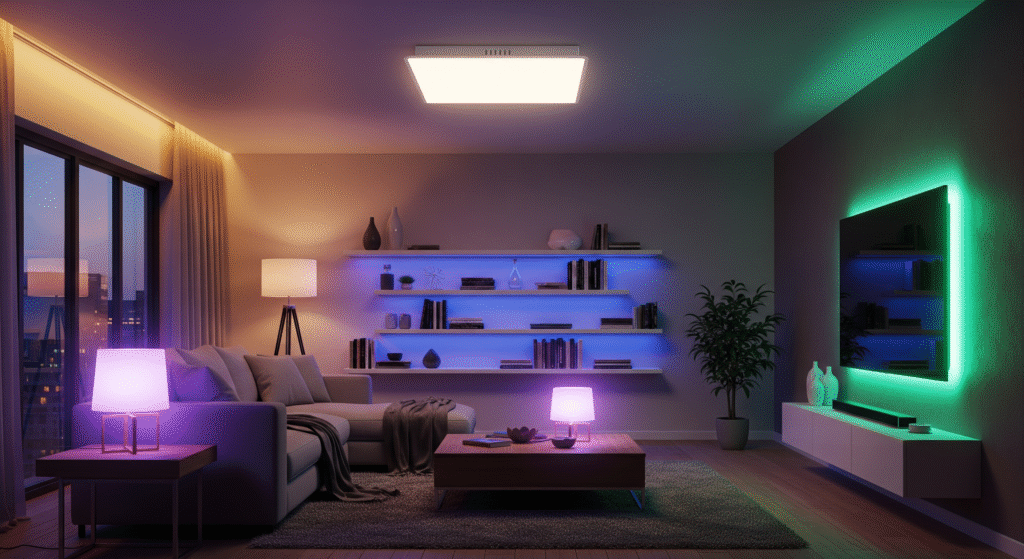
Smart lights are popular for their convenience and energy-saving features. Many wonder if these lights use more electricity and how they affect the environment. Understanding the environmental impact of smart lights helps make better choices for home lighting.
Energy Efficiency Compared To Traditional Lights
Smart lights use LED technology, which is much more energy-efficient than traditional bulbs. They consume less power while providing the same brightness.
- LED bulbs use up to 80% less energy than incandescent bulbs.
- Smart controls allow lights to turn off automatically when not needed.
- Adjusting brightness saves additional energy.
This efficiency reduces overall electricity use and lowers carbon emissions.
Impact Of Standby Power Consumption
Smart lights stay connected to Wi-Fi for remote control, which uses some power even when off.
| Type of Light | Standby Power Use (Watts) | Annual Energy Use (kWh) |
|---|---|---|
| Smart LED Bulb | 0.5 | 4.38 |
| Traditional LED Bulb | 0 | 0 |
Standby use is small but adds up with many bulbs. Choosing smart lights with low standby power helps reduce waste.
Reduction Of Light Pollution
Smart lights can reduce light pollution by controlling brightness and timing.
- Turn off lights in empty rooms automatically.
- Dim outdoor lights during late hours.
- Use motion sensors to limit light use only when needed.
This reduces excess light that harms wildlife and wastes energy.
Materials And Lifespan Impact
Smart LED bulbs last longer than traditional bulbs, lowering waste. Fewer replacements mean less manufacturing and disposal impact.
- LED bulbs last 15,000 to 25,000 hours.
- Traditional bulbs last about 1,000 hours.
- Longer lifespan reduces landfill waste.
Smart lights use electronic parts, which require careful recycling to avoid pollution.
Frequently Asked Questions
Do Smart Lights Consume More Electricity Than Regular Lights?
No, smart lights typically use the same or less electricity than regular lights. They use energy-efficient LED bulbs and offer features like dimming, which reduce overall power consumption.
How Much Electricity Do Smart Lights Use Daily?
Smart lights use about 5 to 15 watts per hour, depending on brightness and settings. On average, they consume less energy than traditional incandescent bulbs.
Can Smart Lights Save Electricity Costs Effectively?
Yes, smart lights save electricity by allowing scheduling, dimming, and remote control. These features reduce wasted energy and lower your electricity bills over time.
Do Smart Lights Use Electricity When Turned Off?
Smart lights use a small amount of electricity in standby mode for connectivity. However, this standby power is minimal and much lower than when the light is on.
Conclusion
Smart lights do not always use more electricity than regular bulbs. In fact, when people ask, “Do smart lights use more electricity?” the answer is usually no. Smart bulbs often use less power because they rely on energy-efficient LED technology. Their smart controls also help turn lights off when they’re not needed, which saves energy and lowers your electricity bill.
Although some smart features use a small amount of standby power, the overall energy use remains low. Choosing smart lights can be a good option for saving electricity while enjoying added convenience and better control. Before switching, consider your home’s needs—smart lights can fit well into many homes without wasting energy.